WWF – Journey of Water ChaLLENGE
tugela River
13 – 21 March 2026
#JourneyOfWater2026

Your General Travel Guide
You’ve explored our Need to Know page for the nitty-gritty details and browsed the Itinerary page for your day-to-day adventure plan — now it’s time for the practical extras.
This FAQ section is your go-to hub for general travel information, useful tools, and quick-reference links.
Here, you’ll find:
Weather apps to help you pack and plan
Currency converters for up-to-date exchange rates
Map locations for key destinations
Details on plugs and voltage used in South Africa
And a little bit of everything in between to make your trip smooth and stress-free
Think of this page as your digital travel toolbox
everything you need to stay informed, prepared, and confident as you explore.
Most international visitors do not need a visa for short stays of under 90 days, provided their nationality is on the visa‑exempt list.
All visitors must hold a valid passport with at least six months’ validity from departure and at least two blank pages.
Be sure to contact your local embassy or consulate for the most up-to-date visa requirements, please also visit VisaHQ or Sherpa.
It is your own responsibility to have the correct travel documentation. If you do need a visa, it is your responsibility to research the necessary documentation needed and apply well in advance to your date of travel.
We are able to provide Visa Support Letters.
Please consult your Doctor or Travel clinic for this information. For more information and recommendations please visit CDC , WHO and UK GOV websites.
Yellow fever certificates are required if your journey starts or entails passing through the yellow fever belt of Africa or South America.
Routine vaccinations (e.g. tetanus, hepatitis A/B) are recommended by many health authorities.
The areas we will be in are considered Malaria free areas. (If you are joining our Kruger post trip extension, you will be travelling to a low-risk malaria area.)
Yes, travel insurance is compulsory in order to participate on any of our trips. When selecting a travel insurance policy we require that at a minimum you are covered for medical expenses including emergency evacuation and repatriation.
A minimum coverage of USD200,000 / GBP151,000 / EUR173,000 is required. We strongly recommend that the policy also covers personal liability, cancellation, curtailment and loss of luggage and personal effects.
Some tours include adventure activities that require extra coverage; please review your itinerary and make sure that you are covered for all included activities.
In urban areas, tap water is generally treated and safe to drink; Johannesburg’s water supply regularly meets national safety standards. In rural areas this is not always the case even though many will consider water from the Drakensberg rivers and streams safe to drink.
Nonetheless, we encourage you to stick to bottled or filtered water to ensure you remain healthy and fit to enjoy your trip. We will also be providing water re-fill points, thus a refillable water bottle is part of your packing list.
South Africa has 12 official languages. English is commonly spoken in cities and tourist areas and our accommodation stops, and it’s widely used in business, hospitality, and by tour operators. However, in rural areas where we will be, English might be limited and Zulu is the local language. It’s always a good idea to know how to say a few basic phrases in the local language.
English Zulu Phrase Pronunciation Guide
|
English |
Zulu Phrase |
Pronunciation Guide |
|
Hello |
Sawubona (to one person) |
sah-woo-BOH-nah |
|
Hello (to more than one) |
Sanibonani |
sah-nee-boh-NAH-nee |
|
How are you? |
Unjani? |
oon-JAH-nee |
|
I am fine, thank you |
Ngiyaphila, ngiyabonga |
ngee-yah-PEE-lah, ngee-yah-BOHN-gah |
|
Thank you |
Ngiyabonga |
ngee-yah-BOHN-gah |
|
Goodbye |
Hamba kahle (to one) |
HAHM-bah GAH-shleh |
|
Goodbye (to more than one) |
Hambani kahle |
hahm-BAH-nee GAH-shleh |
The local currency is the South African Rand (ZAR). Most hotels, restaurants, and shops accept major credit cards ie. Visa & Master Card; some rural or local vendors may prefer cash.
ATMs are widely available in cities, less so in remote areas – we recommend that you carry some Rands (R1,000 to R2,000) for those small purchases.
South Africa uses Type M plugs (three large round pins) and Europlug (Type C), with a standard voltage of 230 V at 50 Hz.
Universal Adapters is recommended for your packing list to ensure you can charge your devices.
Power Adaptor Checking Tool
Links to examples of adaptors:
UK to SA Adaptor
USA to SA Adaptor
EU to SA Adaptor
AUS to SA Adaptor
* You are responcible to make sure you have the correct adaptors.
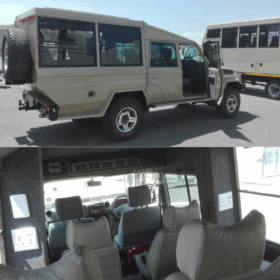
These are power points within our Land Cruisers.
As seen in the image, however these are not there for continued use. There will be power in the accomidation at night.
March in the regions we will travel is within South Africa’s summer rainy season, characterized by warm humid days and frequent afternoon thunderstorms – especially in the Drakensberg.
Expected temperatures – High / Low: 26–27 °C (78-80 °F) / 13–15 °C (mean ~ 55–59 °F)
Expected Rainfall: 80 mm (3.1 inches) over the month of of March.
Expected Humidity: 65–80%
Sunshine / Daylight: around 7–8 h of sun daily; daylight ~ 11–12 h
Dress and pack accordingly: layer clothing for mountain mornings and evenings; bring rain gear and waterproof footwear; sun protection is essential throughout, though UV risk decreases gradually from February to April.
Essentials include: quality hiking boots, waterproof jacket, layers (for changing mountain weather), sun protection (hat, sunscreen), daypack, reusable water bottle, and swimwear if kayaking. Please also see the Packing List. (Add link to packing list)
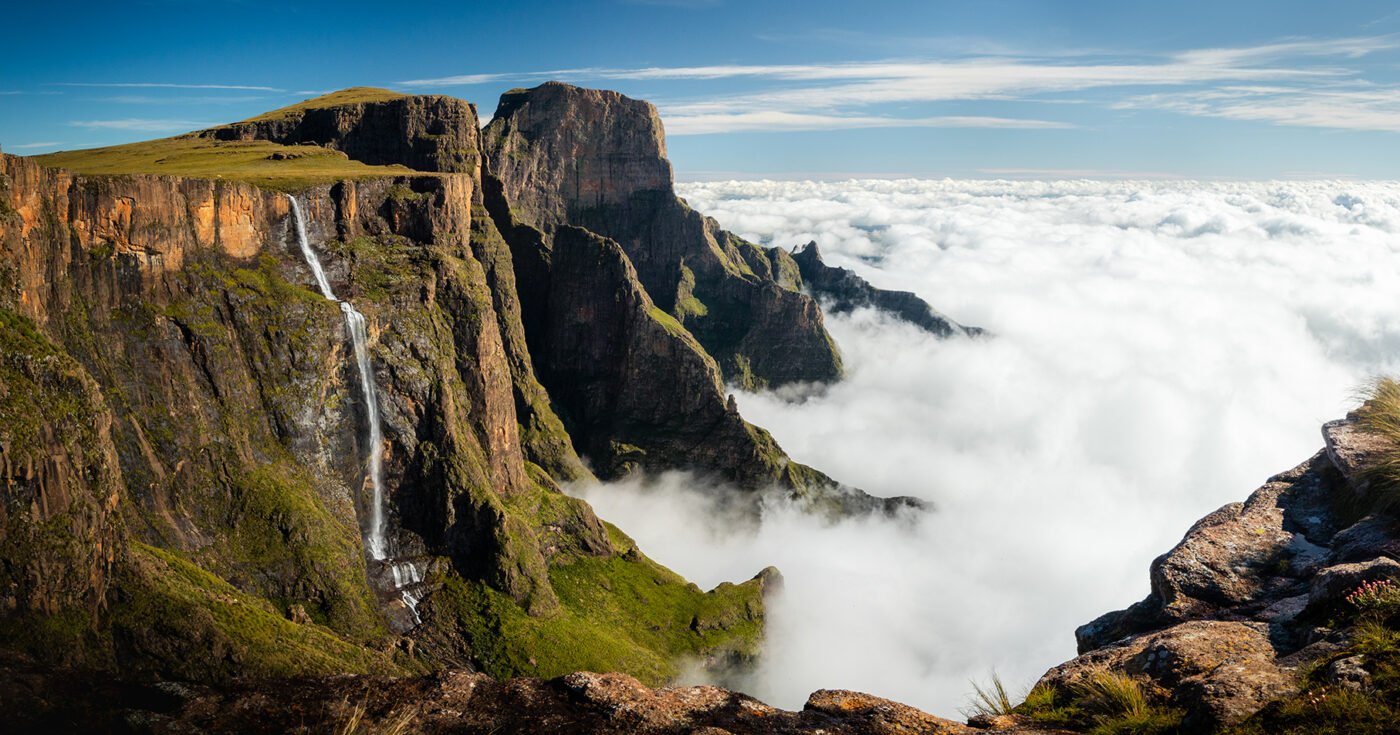
The Drakensberg escarpment ranges from roughly 1,500m (4,920ft) to above 3,000m (9,840ft) and some peaks. Expect cool mountain mornings and evenings, with warmer midday temperatures in spring and summer; weather can shift quickly.
While the accommodation establishments will have lighting, a headlamp or personal torch is strongly advised for safety during early‑morning activities or camp movements at night.
Your safety is our top priority, and although South Africa has both safe and high-crime areas, we will be running the trip ONLY in areas that are safe for visitors.
South Africa has both safe and high-crime areas.
Sandton is a relatively secure, well-patrolled business and tourism hub.
Rural areas like the Drakensberg are generally safe. Use common-sense precautions: be aware of pick-pocketing in crowded areas, avoid walking alone at night, keep valuables out of sight, and follow your guide’s safety instructions.
Most of the accommodation establishments will offer Wi-Fi in general areas, but don’t expect reliable connections. Usually there is no connectivity in your room. If you would like, you can buy a local SIM card (e.g., Vodacom or MTN) and get a data package valid for 7-14 days.
Johannesburg/Sandton: High-speed internet and mobile data are widely available (4G/5G).
Drakensberg area: Mobile signal can be weak, intermittent or non-existent, especially in remote valleys. Don’t expect connections during hikes or kayaking.
All meals (breakfast, lunch, and dinner) are included daily unless otherwise stated.
Packed lunches are provided for active days (e.g., hikes or kayaking). For packed lunches you can expect a sandwich, 1 fresh fruit, a snack / energy bar and a juice.
A traditional potjie-kos cooking competition is included – A traditional South African potjie kos meal, cooked in a cast-iron pot, generally consists of meat, vegetables, and spices, layered and slow-cooked without stirring. The dish is characterized by its layered approach, where ingredients are added in stages, allowing flavors to meld together as it simmers over an open fire or on a stove.
We will cater for meal needs to the best of our ability, however it might be heavily dependent on availability of ingredients in rural areas. Vegetarian, vegan, gluten-free, and allergy-sensitive options are available with advance notice.
Basic snacks will be provided during the day in the form of fruit and general snacks with water.
For hiking:
Comfortable hiking boots with good grip (some rock scrambling), quick-dry socks, rain jacket, hat, and a small daypack.
For kayaking:
Water shoes or closed sandals, swimwear.
For daily use:
A pair of trainers, sneakers or sandals.
The hike is moderate to strenuous, depending on pace and weather.
It’s around 14 km (round-trip), involves river crossings, some rock-hopping, and optional chain ladders to viewpoints.
A reasonable level of fitness, balance, and mobility is required. Guides will assist and adapt if needed. (Within reason and dependant on the rest of the groups experience)
You may see baboons, eland, dassies (rock hyrax), and diverse birdlife (e.g., vultures, sunbirds). Respect wildlife and do not feed or approach animals
Snakes are rare but possible (puff adders, rinkhals); they usually avoid humans. Wear boots and avoid tall grass.
Flora includes endemic wildflowers, proteas, ferns, and alpine vegetation.
Yes. Guests will meet local community members during the North Drakensberg Collaborative presentation, the archaeological site visit, and the cooking competition.
Be respectful and friendly: ask before taking photos, avoid flashy displays of wealth, and show genuine interest. Please do not give money to any locals.
Some basic Zulu greetings like “Sawubona” (hello) are always appreciated.
Your local guides will brief you on any specifics to be mindful of, should there be any.
Summer (Nov–Mar):
Highest flow – fed by seasonal rains. Tugela Falls is often in full cascade.
Autumn (Apr–May):
Reduced but still visible; misty falls may occur.
Note: Cloud cover can limit visibility of the falls from the gorge – clear mornings are best for viewing.
miniSASS is a citizen‑science tool developed in South Africa that lets participants assess river health by identifying aquatic macroinvertebrates in samples and scoring water quality. It’s designed to be accessible to non‑scientists, requiring no prior experience. The local team will walk you through the process before you do it.
The main roads between Johannesburg and the Drakensberg area are paved and accessible by standard vehicles.
Some access roads to lodges or activity points may be gravel and there will definitely be bumpy roads that are very rural that need expeditions vehicles.
A good level of fitness is required. Activities will be paced with regular breaks.
You should be able to hike for 2 hours intervals with a 10-15min rest period and paddle for 1 hour.
All activities are optional and you will be presented with an alternative activity where possible.
Hotels and lodges offer en-suite bathrooms with hot water and Western toilets.
During hikes/kayaking, facilities are limited and there will be no official facilities and you will ‘go’ in nature. Guides will advise on etiquette.
Campsites and picnic spots have basic toilets. Pack hand sanitizer.