WWF – Journey of Water ChaLLENGE
tugela River
13 – 21 March 2026
#JourneyOfWater2026

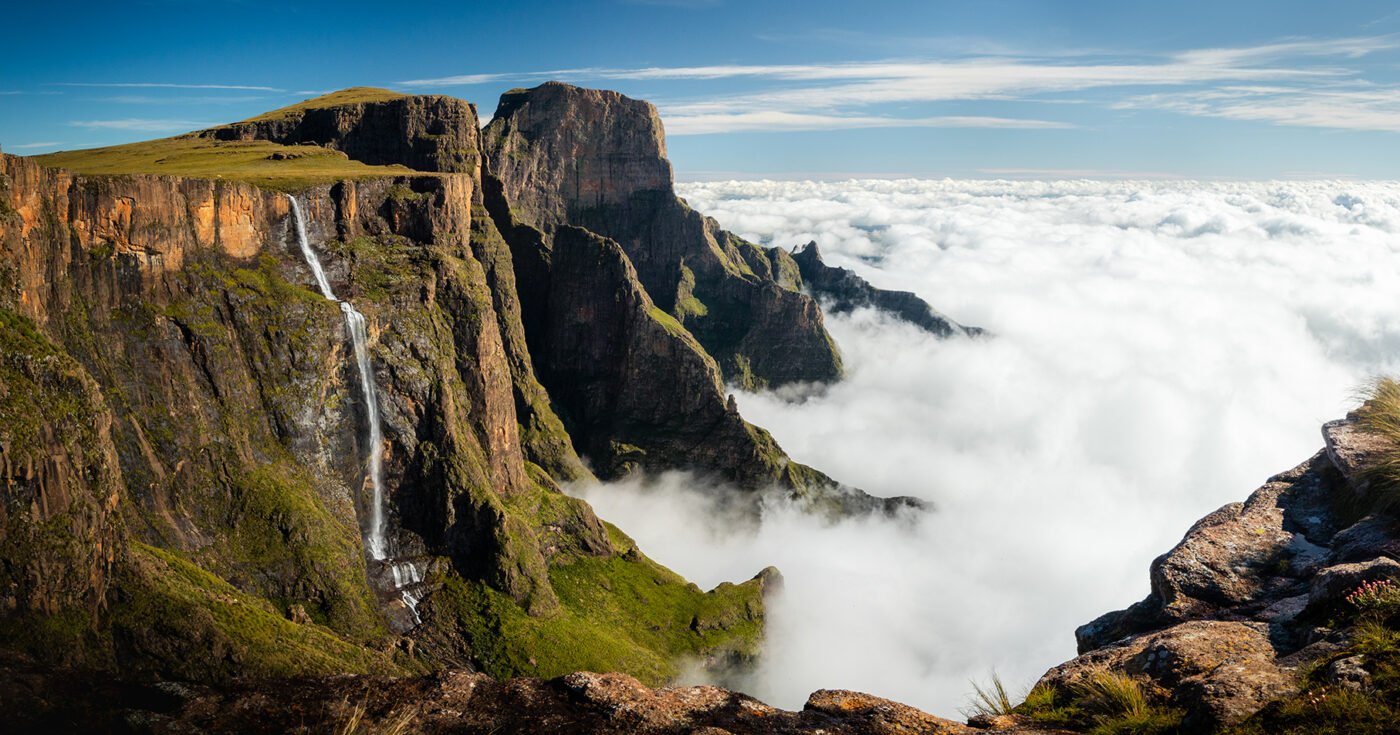
Welcome to your all-in-one hub for preparing for your journey!
This is where you’ll find everything you need to feel informed, confident, and ready for the adventure ahead
— from essential details to practical extras and handy resources.
Inside this section, you’ll discover:
Packing lists, fitness notes, and safety guidance
Weather tips and travel advice to help you plan smart
Currency converters, map links, and plug/voltage details
Quick downloads and resources for easy offline access
Think of this page as your digital travel toolbox — the perfect mix of nitty-gritty details,
general travel guidance, and helpful links all in one place.
We encourage you to take time to browse through the information provided, as it will make your trip smoother,
easier, and even more rewarding.
Your adventure is just around the corner — let’s get ready to make it unforgettable!
DIFFICULTY:
3 – Moderate (hiking, kayaking and others in addition to walking)
4 – Challenging (applies to day 3 and the chain ladder section of the hike)
DAY TO DAY:
Hike to the Tugela Falls
The trail is a 14 km (round trip) gradient, winding through indigenous forests. The hike is considered moderate to the foot of the Tugela Falls. You’ll be hiking through indigenous forests and along the river/gorge itself. Though river flow may affect access to the area.
Depending on river flow rates and accessibility, we would alternatively hike to the top of the Tugela Falls, via the chain ladders where we will comply with risk assessments by utilising ropes and harnesses for safety and access to the escarpment. This is the preferred activity for the day.
Alien Clearing and Brush Packing
Walking from site to site within the community management area. Using tools to cut smaller branches and remove them from the clearing sites, as well as walking to river assessment sites.
Paddling on the Tugela River
Total distance paddling is between 16 – 28km flow and access point dependent.
Cultural Day and Archaeology
The trail is a 20 km (round trip) gradient, winding through varying terrain and elevations. Walking with guides, this day will be varied, and care will be taken to provide everyone with support and provision required. We will not be walking alongside the Tugela, instead we will be exploring the region adjacent the river.
Ago Farming and Stream protection
Walking from site to site within the community management area. Activities will include carrying water, planting crops, irrigating fields and accessing rivers for samples and assessments.
SAFETY AND SECURITY:
Many national governments provide a regularly updated advice service on safety issues involved with international travel. We recommend that you check your government’s advice for their latest travel information before departure. We strongly recommend the use of a neck wallet or money belt while traveling, for the safekeeping of your passport, air tickets, cash and other valuable items. Leave your valuable jewelry at home – you won’t need it while traveling. Many of the hotels we use have safety deposit boxes, which is the most secure way of storing your valuables. A lock is recommended for securing your luggage.
During your trip you will have some free time to pursue your own interests, relax and take it easy and explore at your leisure. Please note that any optional activities you undertake are not part of your itinerary, and we offer no representations about the safety of the activity or the standard of the operators running them. Please use your own good judgment when selecting an activity in your free time. Although the cities visited on tour are generally safe during the day, there can be risks to wandering throughout any major city at night. It is our recommendation to stay in small groups and to take taxis to and from restaurants, or during night time excursions.
Water based activities have an element of danger and excitement built into them. We recommend only participating in water based activities when accompanied by a guide(s).
TRIP SPECIFIC SAFETY:
Care should be taken when wandering around on your own in central Johannesburg, as some areas can be dangerous and pickpockets are daring.
ITINERARY DISCLAIMER:
While it is our intention to adhere to the route described below, there is a certain amount of flexibility built into the itinerary and on occasion it may be necessary, or desirable to make alterations. The itinerary is brief, as we never know exactly where our journey will take us. Due to our style of travel and the regions we visit, travel can be unpredictable. The Trip Details document is a general guide to the tour and region and any mention of specific destinations or wildlife is by no means a guarantee that they will be visited or encountered.
CODE OF CONDUCT:
Illegal drugs will not be tolerated on any trips. Possessing or using drugs not only contravenes the laws of the land but also puts the rest of the group at risk. Smoking marijuana and opium is a part of local culture in some parts of the world but is not acceptable for our travelers. The exploitation of prostitutes is completely contrary to this philosophy. Such activities are illegal in the area we operate in.
Arrival Transfers:
Travellers are met at the international (or domestic) arrivals hall with a personalized board with the participant’s name on it.
Flights are monitored for updated arrival times, we will not charge a waiting fee for delayed flights.
For arrival clients we will wait for up to 1 hour if no updated or additional information has been received. When 1 hour is exceeded it will be charged as a no show fee (100% of the reservation).
Should an additional transfer be necessary, this can be arranged by calling the local E4K emergency number. This will incur a charge for the participants own account and will need to be claimed back via travel insurance. The alternative is to make use of an Uber or airport taxi for the participants’ own account.
Should there be a flight delay prior to boarding your flight, a connection flight delay or new flight information, the local E4K emergency contact number +27 (0)84 587 3966 // +44 (0)777 118 3449 needs to be contacted with updated flight details and arrival time. Should you fail to provide us with the updated flight details and the transfer driver waits more than 1 hour, it will be considered a no show.
For new flight details we can reschedule the airport transfer up to 24 hours before the original arrival time.
Arrival Instructions:
Upon entering the International arrivals hall look for your driver and board with your name on it, if you are unable to locate your driver within 15min, please call the E4K local emergency number +27 (0)84 587 3966 // +44 (0)777 118 3449.
If you are unable to make calls, proceed to the nearest Information desk and ask the attendant to help you make a local call from the desk phone. You will be assisted to locate your transfer driver.
Cancellation policy that will incur cost:
A cancellation fee of 100% of the total price applies to short distance transfers cancelled less than 5 hours in advance.
Departure Transfers:
We undertake to provide all participants with their departure transfer details the night before the official end of the event. We will group participants with similar flight departure times together and the transfer driver will meet them in the hotel reception area. The transfer will depart approximately 4 hours before the departure time to arrive at the airport within the suggested 3 hours prior flight arrival time. It is the sole responsibility of each and every participant to not miss their airport transfer and E4K will not take responsibility for participants that miss their transfers. The trip ends on departure day upon check-out from the hotel. The last included service is the departure airport transfer.
Included departure airport transfers are scheduled to depart only from the end hotel listed in the itinerary, they are not transferable to other people, pick up location or date.
Your experience is supported by a highly skilled, multidisciplinary team dedicated to safety, conservation, learning, and storytelling. From planning and logistics to field expertise and medical support, our team is with you every step of the journey.
Our team includes:
The Drakensberg escarpment ranges from roughly 1,500m (4,920ft) to above 3,000m (9,840ft) and some peaks. Expect cool mountain mornings and evenings, with warmer midday temperatures in spring and summer; weather can shift quickly.
All meals (breakfast, lunch, and dinner) are included daily unless otherwise stated.
Packed lunches are provided for active days (e.g., hikes or kayaking). For packed lunches you can expect a sandwich, 1 fresh fruit, a snack / energy bar and a juice.
A traditional potjie-kos cooking competition is included – A traditional South African potjie kos meal, cooked in a cast-iron pot, generally consists of meat, vegetables, and spices, layered and slow-cooked without stirring. The dish is characterized by its layered approach, where ingredients are added in stages, allowing flavors to meld together as it simmers over an open fire or on a stove.
We will cater for meal needs to the best of our ability, however it might be heavily dependent on availability of ingredients in rural areas. Vegetarian, vegan, gluten-free, and allergy-sensitive options are available with advance notice.
Basic snacks will be provided during the day in the form of fruit and general snacks with water.
Your safety is our top priority, and although South Africa has both safe and high-crime areas, we will be running the trip ONLY in areas that are safe for visitors.
South Africa has both safe and high-crime areas.
Sandton is a relatively secure, well-patrolled business and tourism hub.
Rural areas like the Drakensberg are generally safe. Use common-sense precautions: be aware of pick-pocketing in crowded areas, avoid walking alone at night, keep valuables out of sight, and follow your guide’s safety instructions.
In urban areas, tap water is generally treated and safe to drink; Johannesburg’s water supply regularly meets national safety standards. In rural areas this is not always the case even though many will consider water from the Drakensberg rivers and streams safe to drink.
Nonetheless, we encourage you to stick to bottled or filtered water to ensure you remain healthy and fit to enjoy your trip. We will also be providing water re-fill points, thus a refillable water bottle is part of your packing list.
South Africa has 12 official languages. English is commonly spoken in cities and tourist areas and our accommodation stops, and it’s widely used in business, hospitality, and by tour operators. However, in rural areas where we will be, English might be limited and Zulu is the local language. It’s always a good idea to know how to say a few basic phrases in the local language.
English Zulu Phrase Pronunciation Guide
|
English |
Zulu Phrase |
Pronunciation Guide |
|
Hello |
Sawubona (to one person) |
sah-woo-BOH-nah |
|
Hello (to more than one) |
Sanibonani |
sah-nee-boh-NAH-nee |
|
How are you? |
Unjani? |
oon-JAH-nee |
|
I am fine, thank you |
Ngiyaphila, ngiyabonga |
ngee-yah-PEE-lah, ngee-yah-BOHN-gah |
|
Thank you |
Ngiyabonga |
ngee-yah-BOHN-gah |
|
Goodbye |
Hamba kahle (to one) |
HAHM-bah GAH-shleh |
|
Goodbye (to more than one) |
Hambani kahle |
hahm-BAH-nee GAH-shleh |
Most international visitors do not need a visa for short stays of under 90 days, provided their nationality is on the visa‑exempt list.
All visitors must hold a valid passport with at least six months’ validity from departure and at least two blank pages.
Be sure to contact your local embassy or consulate for the most up-to-date visa requirements, please also visit VisaHQ or Sherpa.
It is your own responsibility to have the correct travel documentation. If you do need a visa, it is your responsibility to research the necessary documentation needed and apply well in advance to your date of travel.
We are able to provide Visa Support Letters.
Reckitt will cover your travel insurance on this trip. Once you have booked your travel you will be provided with instructions to sign up to Crisis24, the insurance provider. Please follow the steps carefully and if you have any further questions on this, please contact your local Reckitt office.
We would advise you to also take out your own personal insurance to cover personal items, at your own cost. Reckitt do not insure personal baggage on the travel policy.
Please consult your Doctor or Travel clinic for this information. For more information and recommendations please visit CDC , WHO and UK GOV websites.
Yellow fever certificates are required if your journey starts or entails passing through the yellow fever belt of Africa or South America.
Routine vaccinations (e.g. tetanus, hepatitis A/B) are recommended by many health authorities.
The areas we will be in are considered Malaria free areas. (If you are joining our Kruger post trip extension, you will be travelling to a low-risk malaria area.)
The local currency is the South African Rand (ZAR). Most hotels, restaurants, and shops accept major credit cards ie. Visa & Master Card; some rural or local vendors may prefer cash.
ATMs are widely available in cities, less so in remote areas – we recommend that you carry some Rands (R1,000 to R2,000) for those small purchases.
South Africa uses Type M plugs (three large round pins) and Europlug (Type C), with a standard voltage of 230 V at 50 Hz.
Universal Adapters is recommended for your packing list to ensure you can charge your devices.
Power Adaptor Checking Tool
Links to examples of adaptors:
UK to SA Adaptor
USA to SA Adaptor
EU to SA Adaptor
AUS to SA Adaptor
* You are responcible to make sure you have the correct adaptors.
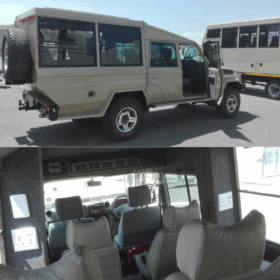
These are power points within our Land Cruisers.
As seen in the image, however these are not there for continued use. There will be power in the accomidation at night.
Most of the accommodation establishments will offer Wi-Fi in general areas, but don’t expect reliable connections. Usually there is no connectivity in your room. If you would like, you can buy a local SIM card (e.g., Vodacom or MTN) and get a data package valid for 7-14 days.
Johannesburg/Sandton: High-speed internet and mobile data are widely available (4G/5G).
Drakensberg area: Mobile signal can be weak, intermittent or non-existent, especially in remote valleys. Don’t expect connections during hikes or kayaking.
Useful links:
Summary guidance for participants
In short, any participant travelling to South Africa with prescription or controlled medication should carry a doctor’s letter. This is mandatory if they are carrying:
We also strongly recommend carrying a doctor’s letter even for smaller quantities of prescription medication. If medication is lost or delayed, this letter gives local doctors something to work from and allows them to contact the relevant GP practice overseas if needed.
Important note:
Showing prescriptions via the NHS App on a phone does not count as a doctor’s letter.
Types of medication
This works similarly to visa requirements: South Africa can change import rules at any time, so there is no definitive list we can provide. Participants are responsible for checking the status of their own medication with official sources.
Based on current publicly available guidance:
How to know if you need a letter
Participants should assume a letter is required if:
What the doctor’s letter must include
The letter should:
How medication should be packed
Final check
Participants should always confirm requirements with:
As regulations can change and final decisions rest with border authorities, this is the only way to ensure up-to-date, accurate information.
March in the regions we will travel is within South Africa’s summer rainy season, characterized by warm humid days and frequent afternoon thunderstorms – especially in the Drakensberg.
Expected temperatures – High / Low: 26–27 °C (78-80 °F) / 13–15 °C (mean ~ 55–59 °F)
Expected Rainfall: 80 mm (3.1 inches) over the month of of March.
Expected Humidity: 65–80%
Sunshine / Daylight: around 7–8 h of sun daily; daylight ~ 11–12 h
Dress and pack accordingly: layer clothing for mountain mornings and evenings; bring rain gear and waterproof footwear; sun protection is essential throughout, though UV risk decreases gradually from February to April.
The hike is moderate to strenuous, depending on pace and weather.
It’s around 14 km (round-trip), involves river crossings, some rock-hopping, and optional chain ladders to viewpoints.
A reasonable level of fitness, balance, and mobility is required. Guides will assist and adapt if needed. (Within reason and dependant on the rest of the groups experience)
You may see baboons, eland, dassies (rock hyrax), and diverse birdlife (e.g., vultures, sunbirds). Respect wildlife and do not feed or approach animals
Snakes are rare but possible (puff adders, rinkhals); they usually avoid humans. Wear boots and avoid tall grass.
Flora includes endemic wildflowers, proteas, ferns, and alpine vegetation.
Yes. Guests will meet local community members during the North Drakensberg Collaborative presentation, the archaeological site visit, and the cooking competition.
Be respectful and friendly: ask before taking photos, avoid flashy displays of wealth, and show genuine interest. Please do not give money to any locals.
Some basic Zulu greetings like “Sawubona” (hello) are always appreciated.
Your local guides will brief you on any specifics to be mindful of, should there be any.
Summer (Nov–Mar):
Highest flow – fed by seasonal rains. Tugela Falls is often in full cascade.
Autumn (Apr–May):
Reduced but still visible; misty falls may occur.
Note: Cloud cover can limit visibility of the falls from the gorge – clear mornings are best for viewing.
miniSASS is a citizen‑science tool developed in South Africa that lets participants assess river health by identifying aquatic macroinvertebrates in samples and scoring water quality. It’s designed to be accessible to non‑scientists, requiring no prior experience. The local team will walk you through the process before you do it.
The main roads between Johannesburg and the Drakensberg area are paved and accessible by standard vehicles.
Some access roads to lodges or activity points may be gravel and there will definitely be bumpy roads that are very rural that need expeditions vehicles.
A good level of fitness is required. Activities will be paced with regular breaks.
You should be able to hike for 2 hours intervals with a 10-15min rest period and paddle for 1 hour.
All activities are optional and you will be presented with an alternative activity where possible.
Hotels and lodges offer en-suite bathrooms with hot water and Western toilets.
During hikes/kayaking, facilities are limited and there will be no official facilities and you will ‘go’ in nature. Guides will advise on etiquette.
Campsites and picnic spots have basic toilets. Pack hand sanitizer.
You will be on the move a lot, so our advice is to pack as lightly as possible. Your baggage should be clearly labeled and restricted to one compact suitcase, maximum 20kg, plus a daypack. Luggage space on vehicles is limited. Porters are not often available, so be prepared to carry your own bags. It is important to pack clothes for warm days and cool evenings, as well as a warm jacket for early morning activities. A set of smart casual clothes is also advisable for our Farewell Dinner.
The Southern Hemisphere essentially has the opposite weather to the Northern Hemisphere. Between September and May it is considerably warmer with the time between October and March being the hottest, getting up to the high 30C and sometimes above. However, the temperature does drop at night.
We strongly recommend layers to wear from the start of the day until the night. You might still need to wear a fleece jacket in the mornings, a t-shirt during the day and again the fleece jacket at sunset time.
Please be advised that if you plan to bring a drone with you, the use of drones in national parks in Southern Africa is prohibited.
Documents:
Toiletries:
Warm Weather:
Cool Weather:
Essentials:
Activities:
Smart Dress & Miscellaneous:
Laundry
Laundry facilities are offered by some of our hotels for a charge.
Emergency Funds:
Please also make sure you have access to at least an additional USD $200 (or equivalent) as an ’emergency’ fund, to be used when circumstances outside our control (ex. a natural disaster) require a change to our planned route. This is a rare occurrence!
Below you will find links we have used throughout the site, all in one, easy to find place. You can also click on some of these links to access downloadable versions of the information we have provided such as your itinerary and packing list
Packing List
A complete checklist of what to bring.
Visa Information
For your convenience, we have listed two reliable sources of information for you to consult. We also strongly advise you to check directly with your embassy or consulate to get the most up-to-date information.
Please note, we are not responsible for any visa-related issues or requirements.
VISA HQ sherpaHealth & Vaccinations
Please refer to the links below as examples of trusted sources for information on vaccinations, health concerns, and travel restrictions related to chronic medication and illnesses. We strongly recommend you seek professional medical advice and visit a travel clinic if one is available in your country.
CDC WHO GOV UK
Currency Converter
Use this tool to estimate costs on currency conversion. Be aware of conversion fees and bank charges that may affect final amounts.
Weather Updates
These are two reliable forecasts for Johannesburg and Tugela. This is our trusted app for accurate weather across global expeditions.